
Worcester Trash Storage Best Practices: Stop Smells, Rodents, and Overflow (Multi-Family Included)
Here’s the exact Worcester answer: most trash smell and rodent problems come from two things—food/liquid residue and bags sitting out too early or in the wrong spot. Keep trash sealed in official bags, store it in a lidded bin, and only set it out during Worcester’s allowed set-out window on collection day.
Fast Facts (Save This)
- Seal + contain: Tie bags tight and store them inside a lidded bin whenever possible.
- Reduce odor: Keep food and liquids out of recycling; keep trash dry and double-bag wet waste.
- Set-out timing matters: Worcester’s guide specifies set-out on collection day between 6:00–7:30 a.m.
- Overflow plan: Don’t let extra bags linger curbside—use a routine, staging area, or a cleanout/removal option.
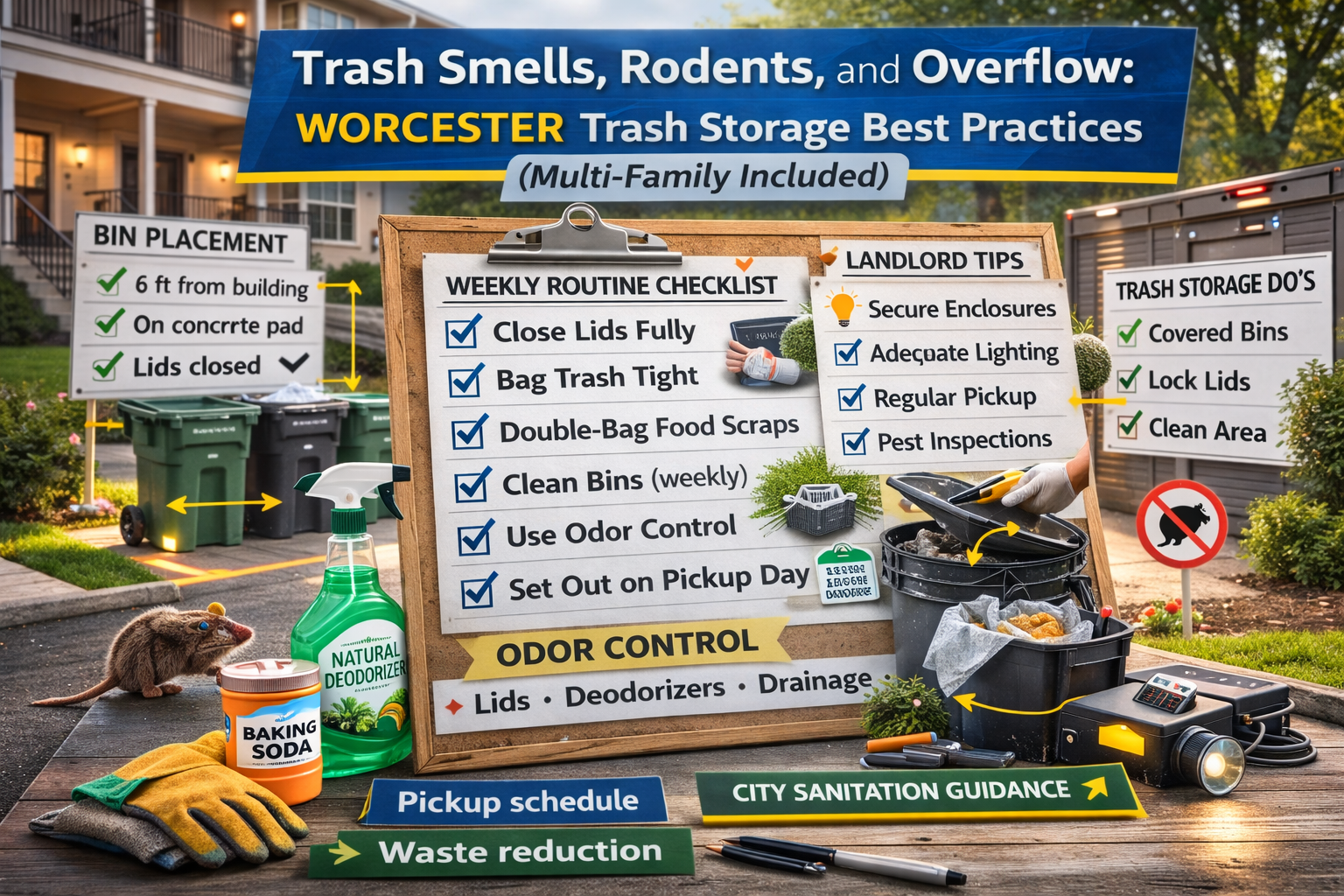
Why Trash Smells (and Why Rodents Show Up)
Trash odor usually comes from moisture + food residue. Rodents and pests follow the same signal: easy food access and consistent “feeding spots” (like loose bags, open lids, or spilled trash).
Top odor triggers
- Leaky food containers and liquids in bags
- Warm weather + bags sitting out too long
- No lid (or lid left open) on your storage bin
- Trash residue at the bottom of bins
Top rodent triggers
- Loose bags, torn bags, or overfilled bags
- Spilled trash near curb or dumpster area
- Overflow stored outdoors without a sealed container
- Consistent leftover food access week after week
The Simple Worcester System (Works for Apartments + Multi-Family)
Step-by-step weekly routine
- Line your bin: Use a sturdy liner if you have recurring leaks (especially in summer).
- Keep trash dry: Let wet food drain; double-bag anything that’s messy.
- Seal bags tight: Tie a strong knot; don’t “tent” or overstuff bags.
- Store in a lidded bin: Keep the lid closed—this is the biggest smell + pest reducer.
- Set-out only in the approved window: Worcester’s guide says curb set-out between 6:00–7:30 a.m. on collection day.
- Do a 2-minute sweep after pickup: Pick up spills and loose trash right away.
- Rinse day: Once a week (or biweekly), quick rinse the bin bottom to prevent buildup.
Bin Placement That Reduces Odors + Complaints
For multi-family buildings, you want one consistent “trash zone” that’s clean, reachable, and not blocking doors, sidewalks, or cars.
Placement checklist
- Choose one spot: Keep bins in the same location to avoid confusion for tenants.
- Keep lids functional: Replace cracked lids; open bins are odor magnets.
- Prevent spills: Keep bins on a flat surface; avoid steep slopes and soft ground.
- Make set-out easy: Clear path for moving bins without dragging bags across sidewalks.
- Label bins: Trash vs recycling signage prevents contamination and messy overflow.
Overflow Plan (So Bags Don’t Sit Outside All Week)
Overflow is where most odor/rodent situations start—extra bags end up outside, get torn, and then the area becomes a repeating problem.
Best options for small overflow
- Stage overflow indoors (or in a sealed lidded container) until the next set-out window
- Compress correctly (don’t overstuff; avoid torn bags)
- Increase recycling to reduce paid trash volume
Best options for big overflow
- Plan a cleanout day (move-outs, turnovers, renovations)
- Use drop-off options for bulky items and special materials
- If you want it gone today: schedule a removal so it doesn’t linger
Printable “Keep It Clean” Checklist (Multi-Family Friendly)
- All bags tied tight (no loose tops)
- Lidded bins closed after every use
- Wet waste double-bagged (no drips)
- Trash zone swept after pickup (2 minutes)
- Bin bottoms rinsed weekly/biweekly
- Overflow never stored outside in loose bags
- Simple signage posted: TRASH vs RECYCLING
Tip: Add this checklist to your tenant move-in packet and post it near the trash zone.
Local Sources (Official)
- City trash & recycling schedule (by address): worcesterma.gov/trash-recycling/schedule
- City trash & recycling guide (set-out window, bag weights, notes): Trash & Recycling Guide (PDF)
- City recycling page (accepted items + “do not” reminders): worcesterma.gov/trash-recycling/recycling
FAQs (Exact Questions People Search)
What’s the best way to prevent trash smells in an apartment building?
Keep trash sealed in tied bags, store it in a lidded bin, keep the area dry, and rinse bin bottoms weekly/biweekly. Most odor comes from moisture + residue sitting too long.
When should I put trash out in Worcester to avoid rodents?
Don’t stage bags outside early. Worcester’s guide specifies set-out on collection day between 6:00 a.m. and 7:30 a.m.. Keeping bags in lidded bins until set-out reduces pests.
How do I keep rodents away from curbside trash?
Use a closed-lid bin, avoid overfilled bags, keep food waste sealed/double-bagged, and clean spills immediately after pickup.
What if overflow trash won’t fit this week?
Don’t leave overflow outside in loose bags. Stage it in a sealed container until next pickup, increase recycling to reduce paid trash, or use drop-off/removal options for large cleanouts.
Are curbside trash and recycling services available for big apartment buildings in Worcester?
Worcester’s guide notes curbside trash and recycling services are for residents of buildings with 6 or fewer units. Larger buildings often use different arrangements.
What bag weights reduce tearing and spills?
Worcester’s guide says small bags should be no more than 15 lbs and large bags no more than 30 lbs. Staying under these weights helps prevent rips and spills.
Helful Resources and Internal Links
Click any link below to read more related articles and Trash Wizard resources:
- Pickup schedule: Worcester Trash & Recycling Pickup Schedule
- Waste reduction: How to Reduce Trash in Worcester
- Recycling rules: Worcester Recycling Rules
- Wish-cycling: Worcester “Wish-Cycling” List
Heads up: pickup rules and seasonal guidance can change. For the most current info, confirm via Worcester’s official pages linked above.