
Worcester Recycling Symbols Explained
The number inside a recycling triangle does not automatically mean the item is accepted in Worcester’s curbside recycling. That symbol is usually a resin identification code—it tells you what type of plastic something is made from, not whether your local program wants it. This guide breaks down what the symbols mean, what Worcester generally accepts vs. rejects, the most confusing items, and a printable cheat sheet you can save.
Worcester uses zero-sort recycling, but “zero-sort” still has rules. Plastic bags and other contaminants stay out.
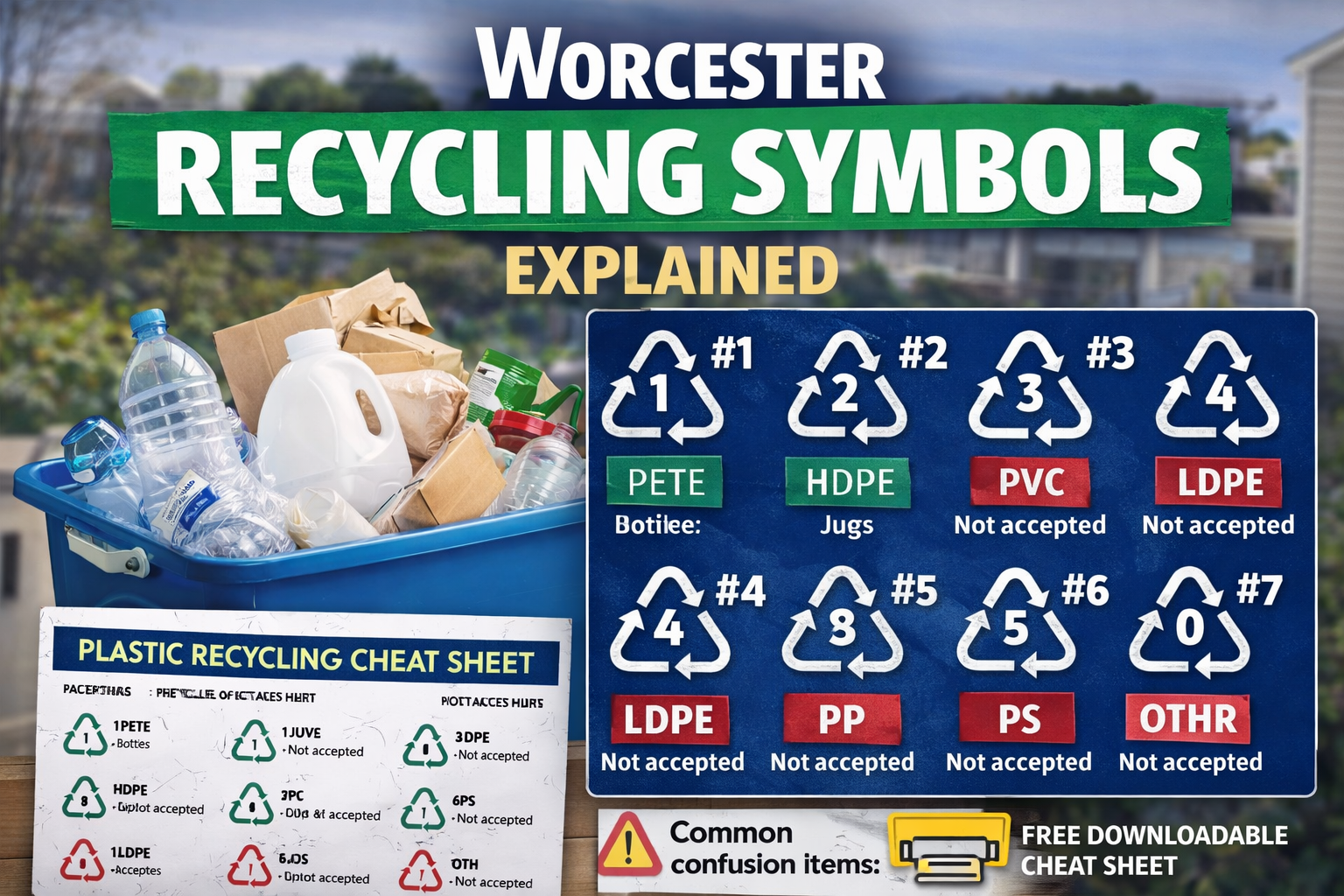
The exact Worcester answer (fast)
In Worcester, the symbol on plastic packaging is best treated as an identification clue, not a “yes, recycle this” stamp. The safest rule is still: recycle clean, empty bottles, jugs, jars, tubs, cans, paper, and cardboard—and keep out plastic bags, film, food-soaked material, cords, and random “maybe” plastics.
Translation: the shape and condition of the item usually matter more than the number printed inside the triangle.
What recycling symbols actually mean
It often means “plastic type,” not “accepted here”
Most plastic symbols are resin identification codes. They help manufacturers and recyclers identify material types like PET, HDPE, or PP.
It tells you what the plastic is made of
Common examples include #1 PET, #2 HDPE, and #5 PP. But local recycling programs decide what shapes and materials they actually accept.
Worcester decides curbside acceptance
A plastic item can have a number on it and still be the wrong thing for curbside recycling—especially if it is film, foam, flexible packaging, or dirty.
Think of the symbol as a label, not a permission slip. Local acceptance is about material + shape + cleanliness + program rules.
What Worcester accepts vs not
These are the safer “yes” items
- Plastic bottles (empty, rinsed)
- Plastic jugs like milk or detergent containers
- Plastic tubs like yogurt or margarine-style containers, when clean
- Metal cans, glass bottles/jars, paper, and cardboard
Keep everything loose, clean enough, and mostly empty.
These are common “no” items
- Plastic bags and plastic film
- Foam / Styrofoam
- Flexible pouches and wrappers
- Black plastic takeout containers when not accepted locally
- Dirty or food-soaked packaging
- Random household plastic items that are not bottles, jugs, or tubs
If it stretches, crinkles, foams, or feels like “mystery plastic,” keep it out unless you confirm otherwise.
Worcester’s official recycling guidance specifically says plastic bags are not allowed in recycling. That one mistake alone causes a lot of contamination and sorting problems.
Common confusion items
These are the items people see every day, notice a symbol on, and assume belong in the bin.
Plastic bags
Even when they have a symbol or a number, they do not belong in Worcester curbside recycling.
Takeout containers
If they are greasy, stained, or made of foam, they are usually not good curbside candidates.
Caps, pumps, and mixed-material packaging
A bottle may be recyclable, but the pump, trigger spray head, or mixed-material lid may not belong in the same stream.
Bubble mailers and padded envelopes
These often look “paper-like” or have symbols on them, but they are usually mixed materials and not curbside-friendly.
Utensils, toys, hangers, and random hard plastics
Many household plastics are not accepted just because they are plastic. Shape and local program rules matter.
Printable cheat sheet
Worcester recycling symbol cheat sheet:
- Triangle + number = plastic type, not automatic curbside acceptance
- Safer yes: clean bottles, jugs, tubs, cans, paper, cardboard
- Safer no: plastic bags, film, foam, greasy packaging, random hard plastics
- When in doubt: check Worcester rules before tossing it in
- Best habit: do not “wish-cycle” items just because they have a symbol
Fast memory trick: number = plastic family. Worcester acceptance = local rules.
FAQs: Worcester recycling symbols explained
Does the recycling symbol mean I can recycle it in Worcester?
No. The symbol usually identifies the material type, not whether Worcester accepts it in curbside recycling.
What do plastic numbers actually mean?
They usually identify the resin or plastic family, such as PET, HDPE, or PP.
Are plastic bags recyclable if they have a symbol on them?
Not in Worcester curbside recycling. Plastic bags and film stay out of the bin.
What plastics are usually the safest to recycle curbside?
Clean, empty bottles, jugs, and tubs are usually safer bets than film, foam, or random molded plastic items.
Why do people get confused by recycling symbols?
Because the triangle looks like a “recycle this” label, when it is often just a material ID code.
What should I do if I’m not sure?
Use Worcester’s official recycling rules, MassDEP’s recycling help page, or Trash Wizard’s guides on common confusion items.