
Worcester County Donation & Reuse Guide: Where Furniture, Clothes, and Household Items Can Go
Here’s the exact Worcester answer: the fastest “responsible cleanout” plan is to sort into donate, reuse/sell, and dispose—then use reputable local organizations (and official disposal guidance) so your items don’t end up rejected at the door. This guide gives you a simple checklist, what orgs usually accept, and what to do when donation isn’t an option.
Fast Facts (Save This)
- Donate only what’s usable: clean, dry, and complete items get accepted fastest.
- Call ahead for furniture: many donation centers have size/condition limits.
- Keep “special items” separate: TVs, batteries, chemicals, and propane often require specific handling.
- Use official guidance for disposal: Worcester’s drop-off and bulk options prevent fines and rejected curbside items.
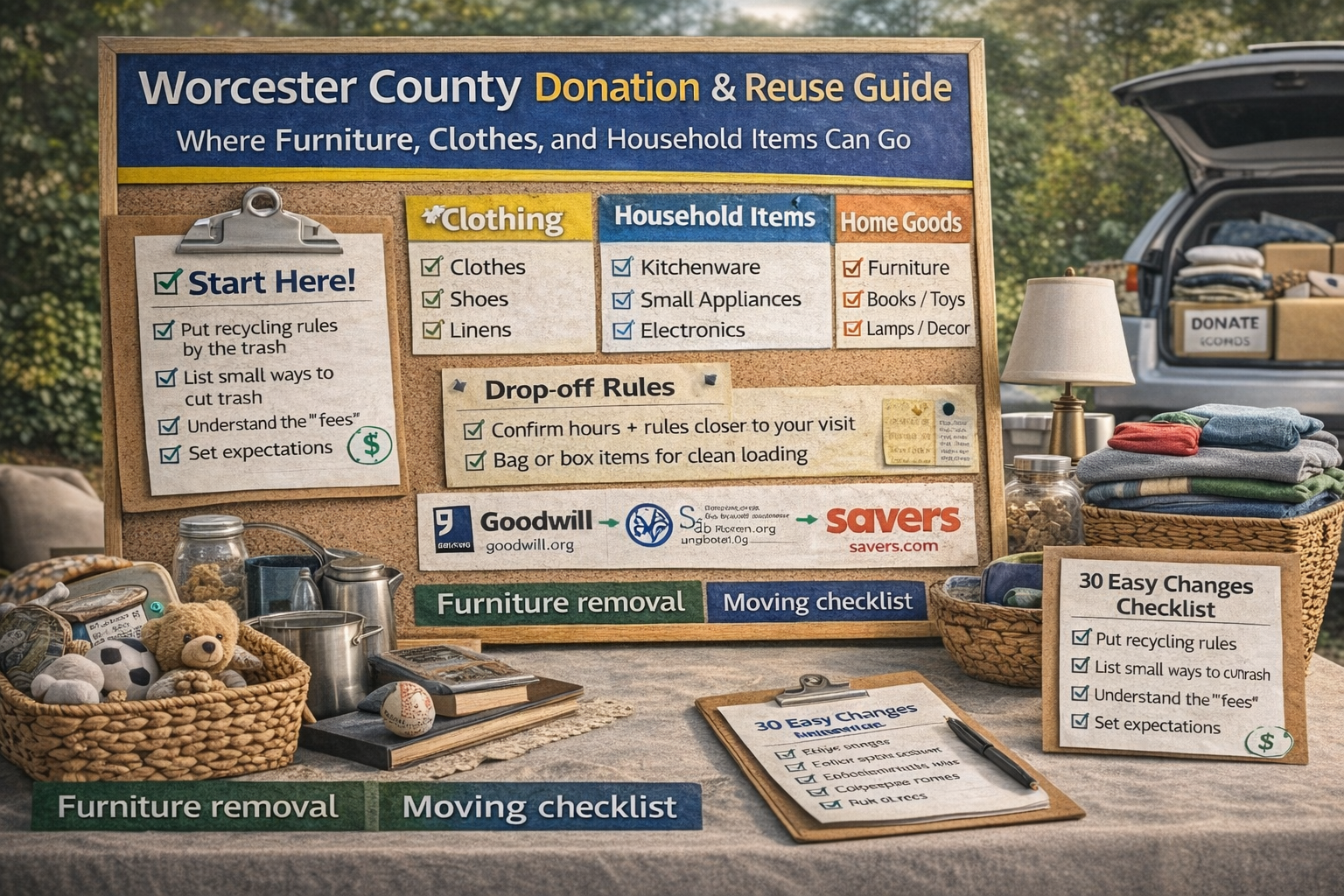
Printable Donation Readiness Checklist
Before you load the car, do this quick “acceptance check” to avoid wasted trips:
- Clean + dry: wipe down surfaces, remove odors, and make sure items are fully dry.
- Complete: include cords, shelves, hardware, and matching parts.
- Safe + usable: no broken frames, exposed springs, sharp edges, or heavy stains.
- Bag small items: bundle accessories so nothing gets separated in the donation line.
- Know your “no-go” items: chemicals, fuels, propane tanks, and many electronics need special programs.
The Simple 3-Pile Sorting System
This is the fastest way to clean out a room, basement, or garage without creating a bigger mess:
Pile 1: Donate (usable today)
- Good condition, clean, complete items that someone can use immediately.
Pile 2: Reuse / Sell (good, but needs extra steps)
- Higher-value items, items needing minor repair, or things better listed online.
Pile 3: Dispose (not usable or not accepted)
- Broken, heavily stained, moldy, infested, or unsafe items.
Where to Donate in Worcester County
Donation options change (hours, acceptance rules, and capacity), so use official directories and organization pages when possible. These are high-trust starting points:
- Recycle Smart MA: Donate & Reuse directory (MassDEP-backed guidance): recyclesmartma.org
- Habitat for Humanity ReStore (great for building materials + some home goods; confirm acceptance first): ReStore donations
- Salvation Army donation locator (check nearest drop-off and what’s accepted): satruck.org
Furniture & Large Items: What Usually Gets Accepted
Large items vary the most by organization. Use this as a practical “what to try donating first” reference, then confirm with the org directly.
| Item | Best Donation/Re-use Route | Common Rejection Reasons | Best Next Step If Rejected |
|---|---|---|---|
| Sofas / chairs | Org that accepts furniture (call/photo first) | Stains, tears, odors, pet damage | Schedule a removal or route to approved disposal |
| Dressers / tables | Donate if sturdy + clean; hardware included | Broken drawers, wobble, missing parts | Remove/haul-away if not usable |
| Cabinets / fixtures | ReStore-style donation (often best fit) | Water damage, mold, missing doors | Follow C&D disposal guidance for damaged materials |
| Mattresses | Usually NOT accepted (varies) | Hygiene + policy restrictions | Use proper mattress disposal/recycling route |
| Appliances | Some accept small appliances only | Safety, refrigerant rules, broken units | Use approved metal/refrigerant handling options |
If you need help with big furniture quicky: Furniture Removal in Worcester County.
Clothes, Textiles & Small Household Items
Clothing and small household goods are typically easiest to donate—if they’re clean, dry, and bagged. For textiles and reuse guidance across Massachusetts, Recycle Smart MA is a helpful reference point. Donate & Reuse
Quick “yes/no” rules
- YES: clean, wearable clothing; paired shoes; linens in decent condition; working small household items.
- NO: wet/moldy fabrics, pest-infested items, sharp/broken goods, heavily stained textiles.
When Donation Isn’t the Right Answer
If items are damaged, unsafe, or restricted, disposal needs to follow local rules. Worcester’s official trash/recycling guide notes that bulk waste includes large items that can’t go out with regular trash and can be brought to the City’s Drop-Off Center on certain days with an appointment. Bulk Waste Drop-Off For Worcester Residents
Common “dispose instead” situations
- Water damage, mold, heavy odors, bed bugs, or unsafe structural damage
- Items with fluids/chemicals (paint, propane, motor oil)
- Large mixed piles from renovations or long-term storage
Helpful Resources/Links
Read more detailed articles and find local services:
- Furniture removal (Worcester)
- Moving checklist (Worcester)
- Estate cleanouts (Worcester)
FAQs: Donation & Reuse in Worcester County
Where can I donate furniture in Worcester County?
Start with organizations that accept large items (call or send photos first), and use directories like Recycle Smart MA’s Donate & Reuse resource to confirm best-fit options.
What do donation centers usually reject?
The most common rejections are stains, odors, broken parts, missing hardware, and safety issues (wobbly furniture, sharp edges).
Can I donate building materials like cabinets, doors, or fixtures?
Often yes—ReStore-style programs are usually the best match for usable building materials. Confirm acceptance rules before drop-off. ReStore donations
Where can I find a reliable “what do I do with this?” donation directory?
Recycle Smart MA’s Donate & Reuse directory is a solid statewide reference and is part of the MassDEP Recycle Smart MA program.
What if my items aren’t usable?
Use official Worcester disposal guidance for bulk items and restricted materials. Worcester’s trash and recycling guidance explains bulk waste handling and drop-off options.
Do I need to call ahead before donating?
For furniture and larger loads: yes. For smaller bagged items: often not, but it still saves time to confirm hours and acceptance rules (especially during busy seasons).