
Why Recycling Loads Get Rejected in Worcester
If a recycling load gets rejected in Worcester, it is usually because too many items in the mix are contaminated, bagged, tangled, or not accepted. The biggest offenders are plastic bags, food and liquid residue, cords and hoses, dirty cardboard, and “wish-cycled” mystery items. This guide explains why loads get rejected, what happens next, and how to keep your own bin clean enough to be accepted.
Local note: Worcester uses zero-sort recycling, but “zero-sort” does not mean “everything goes in.” Plastic bags and contaminated items still cause major problems.
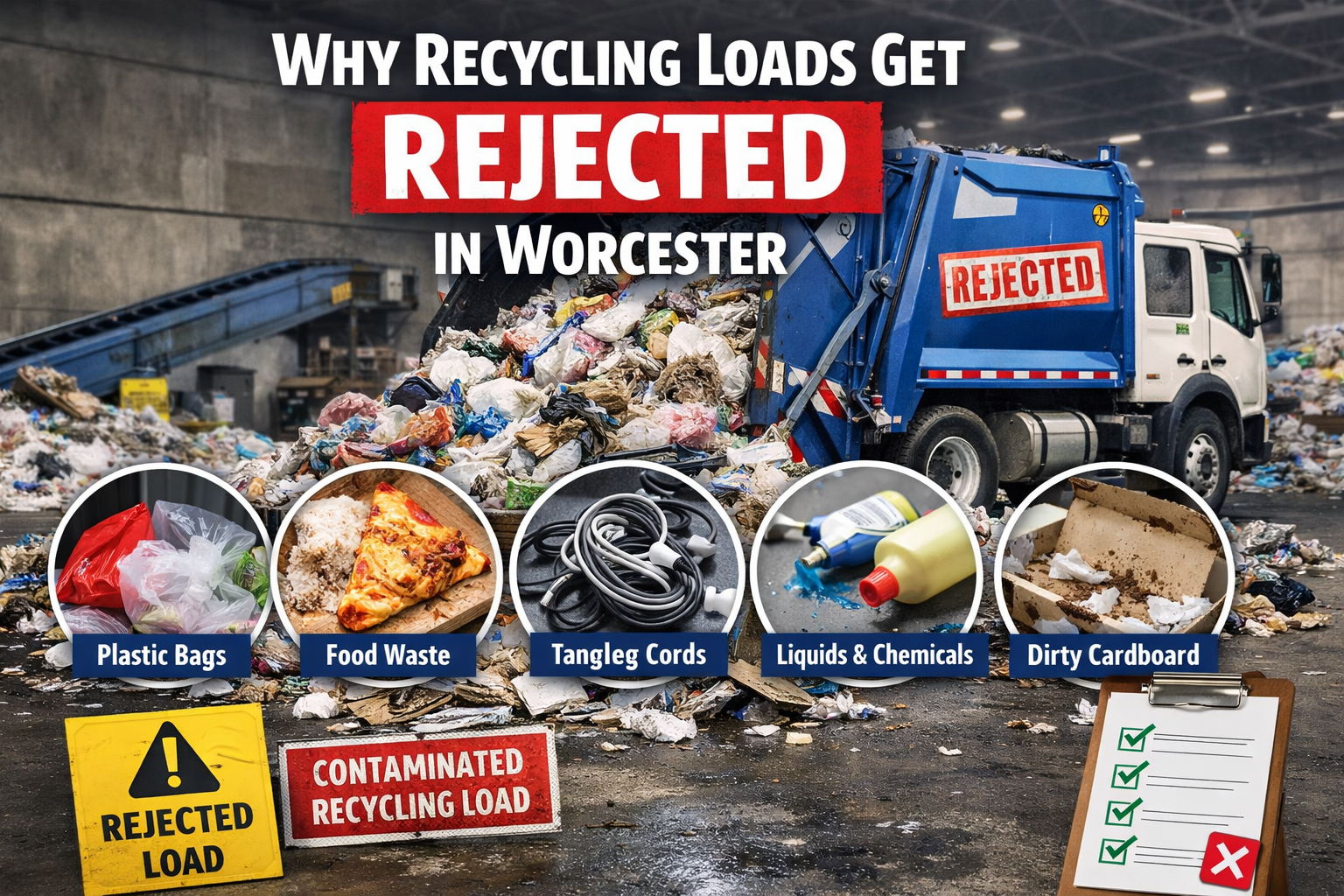
The exact Worcester answer (fast)
Recycling loads get rejected when the material stream is too contaminated to be safely or efficiently sorted. In Worcester, that usually means too many plastic bags, food-soaked items, liquids, cords/wires, or non-recyclable plastics got mixed into the load. Once contamination gets high enough, the recycler may treat the whole load—or a large part of it—as trash instead of recyclable material.
Translation: one bad item does not always ruin a load, but repeated contamination adds up fast and can turn good recycling into landfill waste.
Top 5 contamination causes in Worcester recycling
These are classic “tanglers”
Grocery bags, stretch wrap, bubble mailers, and shrink film wrap around sorting equipment and cause jams. Even if the bag looks “clean,” it does not belong in curbside recycling.
Dirty containers contaminate clean paper
Half-full bottles, sticky jars, and containers with leftover food can leak onto paper and cardboard, lowering the quality of the whole load.
More tanglers
Extension cords, holiday lights, hoses, and wires wrap around conveyors and sorting screens. These items should be kept out of the bin and routed to special disposal options when available.
Grease and moisture matter
Cardboard is highly recyclable when it is clean and dry. Once it is soaked in food grease, oil, or liquid, it can stop being a good recycling candidate.
If you are guessing, you are probably contaminating
Foam, random plastics, broken household items, toys, and “it looks recyclable” materials often get tossed in the bin by mistake. These are some of the most common reasons good loads lose value.
The load fails when too much bad material sneaks in
Contamination is not always dramatic. Often it is a bunch of small mistakes repeated across many households: bagged recyclables, greasy boxes, liquid left in containers, and items that should have gone elsewhere.
What happens when a recycling load gets rejected?
This is the part most people never see. Once contamination gets high enough, the “recycling” may no longer be treated as recycling.
Sorting gets harder or unsafe
Bags jam equipment, liquids spread, and tangled materials slow the line or force workers to remove problem items manually.
Usable material loses value
Paper and cardboard are worth less—or become unusable—when they are mixed with food, moisture, and residue.
More of the load can end up trashed
If the contamination is too heavy, part of the load—or in some cases the whole load—may be diverted away from recycling.
Residents lose trust in the system
People want to recycle correctly. When loads get rejected, it creates confusion and makes good household habits even more important.
How to prevent rejection at home
Never bag your recyclables
Empty recyclables directly into the bin. If you collect them indoors in a bag, dump them out and throw the bag away separately.
No need to overdo it
Containers do not need to be spotless. They do need to be empty enough that food and liquid are not riding along.
And keep greasy parts out
Flatten clean boxes. If a pizza box or takeout box is greasy or soaked, tear off the clean part and trash the dirty part.
Bags, cords, hoses, lights
If it wraps, stretches, or coils, it probably does not belong in your curbside bin.
When in doubt, look it up
Worcester’s official recycling page and MassDEP’s recycling help page are better than guessing “maybe.”
One careless toss adds up
The best recycling system is simple enough that everyone in the household can follow it without overthinking.
Quick checklist (copy/paste or print)
Before you toss something in the recycling bin, ask:
- Is it clean enough and mostly empty?
- Is it loose, not inside a plastic bag?
- Is it not a tangler (bags, cords, hoses, film)?
- Is the cardboard dry and not greasy?
- Am I sure it belongs in Worcester recycling?
If the answer is “no” or “I’m not sure,” stop and check first.
FAQs: why recycling loads get rejected in Worcester
Why does Worcester recycling get rejected?
Usually because of contamination—especially plastic bags, food residue, liquids, dirty cardboard, and tangled materials like cords or hoses.
Do plastic bags really ruin recycling?
They are one of the biggest problems because they tangle sorting machinery and can force slowdowns or shutdowns.
How clean do recyclables need to be?
Not spotless—just empty enough that food and liquid are not contaminating other materials.
Can greasy pizza boxes be recycled?
Only the clean part. Once cardboard is heavily greasy or soaked, it should not go in the recycling bin.
What is wish-cycling?
Wish-cycling is tossing something in the bin because you hope it is recyclable, even though you are not sure. That habit is a major source of contamination.
What should I do when I’m not sure?
Check Worcester’s official recycling guidance, MassDEP’s recycling help page, or use Trash Wizard’s related articles on tricky items.