
What to Do With Construction Debris in Worcester: Drywall, Wood, Tiles, Concrete, Insulation
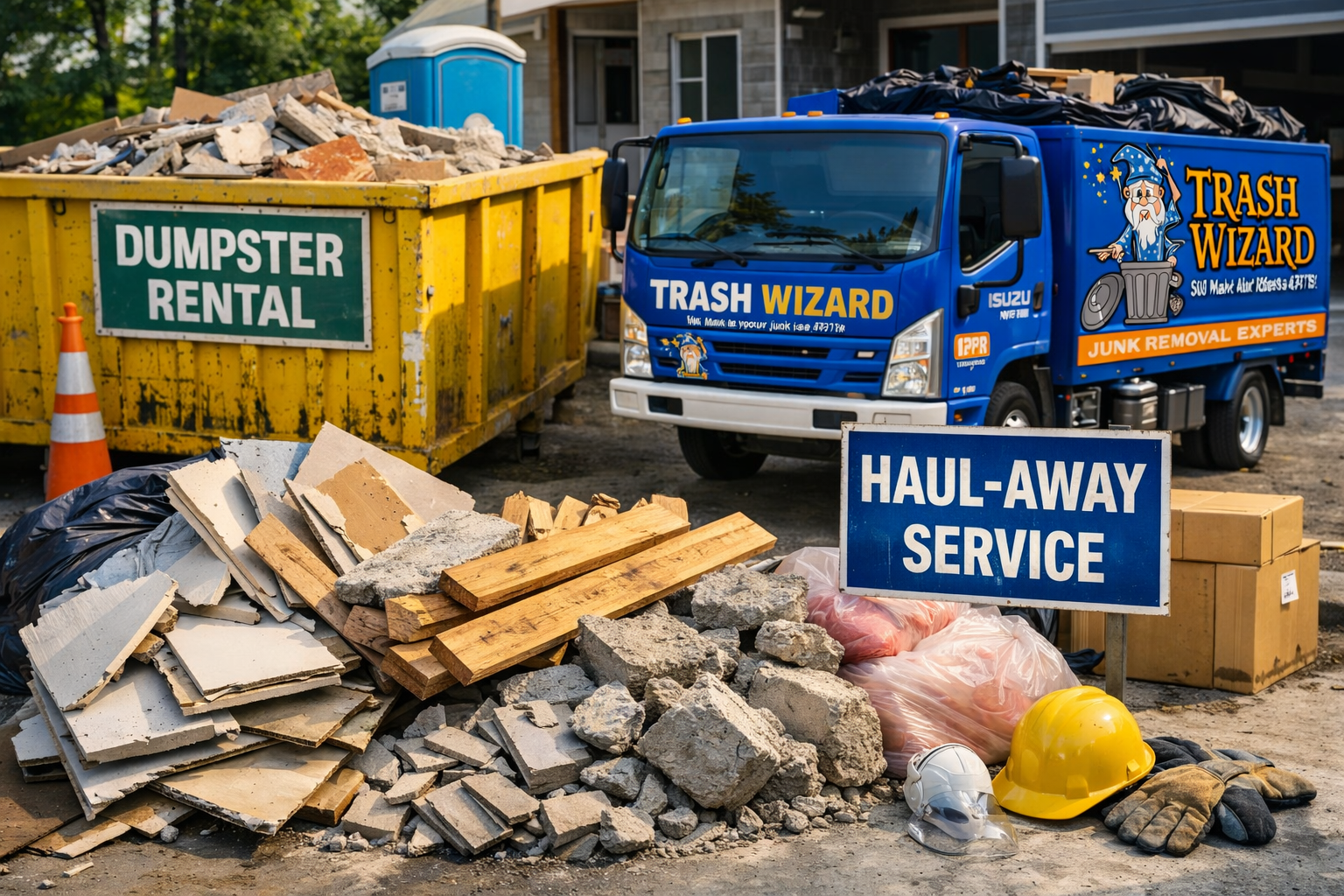
Here’s the exact Worcester answer: most construction and demolition debris (drywall, tile, concrete, insulation, mixed demo piles) should be kept separate, bagged safely, and taken to approved disposal options (often via the City’s Residential Drop-Off Center or a permitted facility). If the pile is heavy, messy, or you can’t transport it, a haul-away pickup is usually the easiest route.
Fast Facts (Save This)
- Keep heavy materials separate: concrete, brick, stone, tile, plaster/drywall.
- Bag the dusty stuff: drywall crumbs, insulation, sweep-up—use heavy contractor bags.
- Don’t mix in prohibited items: chemicals, paint, propane tanks, batteries, e-waste.
- If you can’t lift it safely: haul-away is often the cleanest option.
Official Worcester + Massachusetts Resources
Start with these official pages when rules, accepted materials, or facilities matter:
- City of Worcester — Residential Drop-Off Center / Bulk Waste: worcesterma.gov … /bulk-waste-disposal
- MassDEP — Solid Waste Facilities (find permitted transfer stations/landfills): mass.gov/solid-waste-facilities
- MassDEP — C&D waste presentations/resources: MassDEP C&D resources (PDF)
Debris-by-Material Guide (What to Do With Each Type)
Use this table to decide what to separate, how to stage it, and which option typically fits best. When in doubt, keep materials separated and confirm acceptance at the facility before you load the vehicle.
| Material | Best practice | Typical fit | Notes (avoid problems) |
|---|---|---|---|
| Drywall / Sheetrock | Bag crumbs/dust; stack sheets flat | Drop-off or Haul-away | Dusty + heavy fast. Keep separate from insulation and trash. |
| Wood / Framing | Bundle or stack; pull nails when possible | Drop-off, Dumpster, or Haul-away | Long pieces = awkward loading. Cut to manageable lengths. |
| Tile / Ceramic | Bucket/box small pieces; keep weight balanced | Drop-off or Haul-away | Extremely dense. Don’t overfill bags—double-bag if needed. |
| Concrete / Brick / Stone | Small loads; distribute weight | Drop-off (best) or Haul-away | Most “oops” projects fail from weight. Start with a smaller load. |
| Insulation | Bag tightly; wear PPE | Haul-away or Drop-off | Itchy + airborne. Keep dry; don’t mix with wet debris or paint. |
| Mixed demo pile | Sort first: heavy vs light; clean vs contaminated | Dumpster or Haul-away | Mixed loads can be costly. Sorting often saves time + money. |
Dumpster vs Haul-Away in Worcester (Which Is Better?)
The right choice depends on weight, timeframe, and how cleanly you can sort. Here’s a quick way to decide:
A dumpster is usually best when…
- You’re generating debris over multiple days (demo → framing → finish work).
- The pile is mostly one stream (mostly wood, mostly drywall, etc.).
- You have space for a container and want to self-load.
Haul-away is usually best when…
- The pile is heavy/dense (tile, plaster, concrete) and loading is a pain.
- You need it gone fast and don’t want a container sitting outside.
- You can’t transport it safely (stairs, tight access, limited vehicle).
Safety + Bagging Tips (Prevent Mess, Injury, and Rejection)
PPE basics (worth it)
- Gloves + eye protection (tile shards and drywall dust are brutal).
- N95/respirator for drywall sanding dust and insulation fibers.
- Closed-toe boots with good traction for loading.
Bagging rules that keep pickups smooth
- Use contractor bags for dust/sweep-up—not thin kitchen bags.
- Don’t overfill heavy bags (tile/drywall chunks). Make more bags, not heavier bags.
- Box sharp pieces (tile shards) and tape edges if needed.
- Keep liquids and chemicals out (paint, solvents, fuel, propane).
Tips to Avoid Fees and Disposal Headaches
- Sort first: “Mixed debris” is where costs and rejection risk go up.
- Keep banned/special items separate: batteries, propane tanks, e-waste, chemicals.
- Control weight: tile and concrete can overload a pickup bed fast.
- Stage smart: keep materials accessible so loading is quick and clean.
Printable Checklist (Construction Debris in Worcester)
- ☐ Sort by material: heavy mineral / wood / dusty bagged material
- ☐ Bag dust + insulation tight (contractor bags)
- ☐ Keep prohibited items out (paint/chemicals/propane/batteries/e-waste)
- ☐ Stage piles close to the exit/loading point
- ☐ Plan the route: drop-off vs dumpster vs haul-away
- ☐ Confirm acceptance and hours before you load up
FAQs: Construction Debris Disposal in Worcester
Can I put construction debris out with regular trash in Worcester?
Most construction debris (drywall, tile, concrete, insulation) is not a “regular trash day” curbside set-out item. Use approved disposal options and confirm current rules through the City’s drop-off/bulk guidance.
What’s the easiest way to get rid of drywall and tile?
Keep them separate, bag dust safely, and use a drop-off option or haul-away. Tile and drywall get heavy fast, so avoid overfilled bags.
Where do I take concrete and brick near Worcester?
Start by using MassDEP’s facility resources to find permitted solid waste/transfer facilities, and verify acceptance before you haul. Use: MassDEP Solid Waste Facilities.
How do I avoid getting my load rejected?
Sort materials, keep prohibited items out, and keep heavy minerals (concrete/tile/brick) separate from lighter debris. Confirm acceptance and any prep rules before you arrive.
Is a dumpster always cheaper than haul-away?
Not always. If your pile is heavy (tile/concrete) or access is difficult, haul-away can be the easier (and sometimes more cost-effective) route once labor and time are considered.
What should I do with leftover renovation materials and packaging?
Flatten cardboard, keep recyclables separate, and stage clean packaging away from dusty debris so it can be handled properly.
Article References & Resources
Click below to read more related articles and references:
- Renovation cleanout — Ronovation Cleanout Worcester, MA
- Drop-off options — Donations Drop-Off Worcester, MA
- Bulk Waste in Worcester — Bulk Waste Worcester, MA
- Household hazardous waste — Hazardous Waste Drop-Off Worcester, MA
Heads up: acceptance rules and facility policies can change. Confirm details with the City and/or the receiving facility before you load up.