
Business Recycling in Worcester, MA: A Simple System for Restaurants, Offices, and Retail
Here’s the exact Worcester answer: the fastest way to cut trash costs and reduce mess is to set up a two-stream system (recycling + trash) with clear labels, a 60-second staff script, and a weekly contamination check. This guide gives you a simple setup, printable signage templates, and a training checklist you can implement in one afternoon.
Fast Facts (Save This)
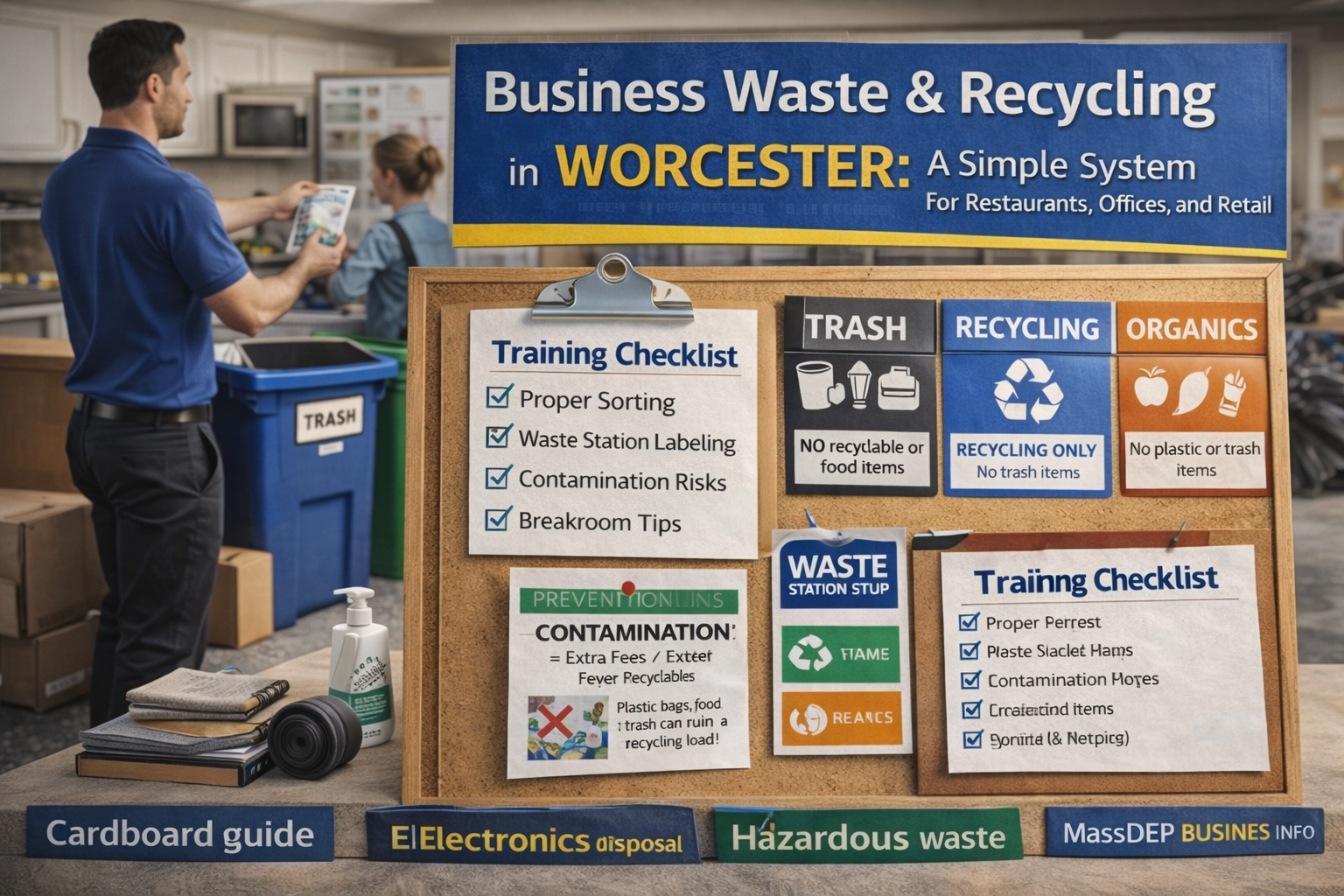
What This Guide Covers (And Why It Works)
This isn’t a complicated “green committee” plan. It’s a practical Worcester business workflow: place the right bins, label them clearly, train staff in one minute, and prevent contamination with a simple reset routine.
You’ll build
- A bin map that matches how your staff actually moves
- Simple labels that stop “wish-cycling”
- A 60-second training script for new hires
- A weekly audit routine that keeps the system clean
You’ll avoid
- Overflow from bad bin placement
- Recycling contamination and rejected loads
- Staff confusion (“Where does this go?”)
- Messy back-of-house piles and loose cardboard
Step-by-Step: Set Up a Business Recycling System in Worcester
1) Build your “bin map” (10 minutes)
- Walk your space and mark 5–10 high-traffic spots (front counter, kitchen line, break room, copier area, shipping).
- Place bin pairs in those spots: Recycling + Trash together.
- Make sure the recycling opening matches the material (slot for paper, round for bottles/cans when possible).
2) Choose your top 3 recyclable streams
Don’t start with every possible material. Start with your biggest volume:
- Cardboard (retail + offices + deliveries)
- Mixed paper (offices)
- Bottles/cans (restaurants + break rooms)
3) Label bins so recycling is “easier than guessing”
- Use big headers: RECYCLE / TRASH.
- Add 3–5 example items (pictures or short words).
- Add a “NO” line for your top contaminants (food, plastic bags/film, foam).
4) Train staff in 60 seconds
Your training goal is not perfection—it’s consistency. Use the same one-minute script for everyone.
Contamination Prevention (The “Do-Not” List for Businesses)
Contamination is what turns “recycling” into rejected loads and messy sorting. These are the most common problem items in restaurants, offices, and retail.
Keep OUT of recycling
- Food or liquids inside containers
- Plastic bags, plastic film, shrink wrap
- Foam (Styrofoam) cups/containers
- Dirty paper towels/napkins
- “Tanglers” (cords, hoses, chains)
Simple fixes that work
- Add a “Dump Liquids Here” station near bottles/cans
- Place bag/film collection separately (not near recycling)
- Do a weekly “top 3 contaminants” reminder at shift start
- Use clear bags for recycling in back-of-house (optional)
Printable Business Recycling Checklist (Worcester)
- Bin pairs placed at all high-traffic points (recycling + trash together)
- Cardboard area defined (flatten boxes + keep dry)
- Labels posted at eye level with examples + “NO” contaminants
- Staff trained with the 60-second script
- Weekly 10-minute bin audit scheduled
- Electronics + batteries have a separate, safe collection plan
- Hazardous items are kept out and handled separately
Signage Templates (Copy/Paste Labels)
Template A: Office Recycling Label
Template B: Restaurant / Breakroom Label
Helpful Resources
Find related articles and pages on our website:
- Cardboard guide (clean vs dirty rules + quick tests)
- Electronics disposal (TVs, computers, batteries, cables)
- Household hazardous waste (paint, chemicals, propane, motor oil)
Heads up: rules and program details can change. For regulatory context and best practices, confirm via MassDEP resources.
FAQs: Business Waste & Recycling in Worcester
What’s the easiest recycling setup for a Worcester business?
Use bin pairs (recycling + trash together) at every high-traffic point, label them with examples, and run a weekly 10-minute audit.
What causes recycling contamination in restaurants?
Food/liquids left in containers, plastic film/bags, and dirty paper products. A simple “dump liquids here” station prevents most issues.
How should retail stores handle cardboard?
Flatten it, keep it dry, and store it in a defined area. Don’t mix shrink wrap or plastic film with cardboard—keep film separate.
Can electronics go in recycling bins?
No—electronics and batteries should be handled separately. Create a labeled collection point and use proper e-waste channels.
Where can I find Massachusetts guidance for waste and recycling?
MassDEP provides statewide guidance and resources for recycling, waste programs, and compliance context.