
Appliance Disposal in Worcester: Fridges, Washers, Dryers, AC Units — What’s Allowed and Why
Here’s the Worcester answer: “metal” appliances like washers and dryers are usually straightforward, but anything with refrigerant (fridges, freezers, AC units, dehumidifiers) needs extra care. This guide shows what to do, what to avoid, and the cleanest path between drop-off, pickup, and haul-away.
Fast Facts (Save This)
- Refrigerant appliances (fridges/freezers/AC/dehumidifiers) require special handling—don’t vent, cut, or tamper with lines.
- Metal appliances (washers/dryers/stoves) are typically “scrap metal friendly,” but you still want safe prep (cords/doors).
- Drop-off can be the simplest if you have a vehicle + help; haul-away is best for heavy items or tight stairwells.
- If you’re already dealing with a bigger cleanout, treat appliances as part of your bulk waste plan.
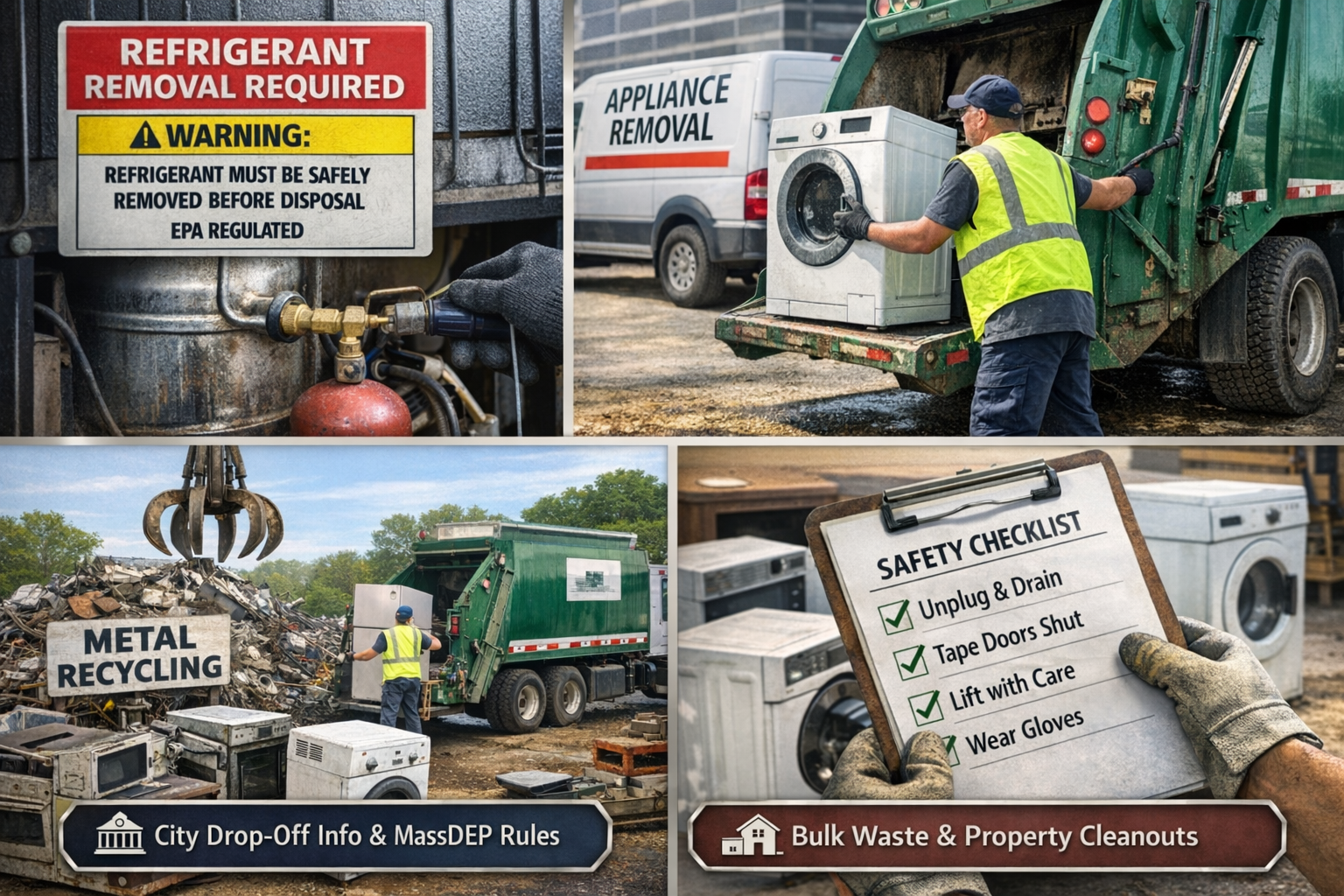
What Counts as an “Appliance” (for Disposal Purposes)
In real-world disposal, “appliances” usually fall into two buckets: (1) refrigerant appliances and (2) non-refrigerant metal appliances. The disposal rules differ mainly because refrigerant systems can’t be released or handled casually.
Refrigerant appliances (special handling)
- Refrigerators & freezers
- Air conditioners (window units)
- Dehumidifiers
Non-refrigerant appliances (mostly metal recycling)
- Washers & dryers
- Stoves/ovens
- Dishwashers
- Microwaves (still special for e-waste considerations in some cases)
Refrigerant Rules (Fridges, Freezers, AC Units): What’s Allowed and Why
Appliances that cool or dehumidify contain refrigerants. Under federal rules, refrigerant must be managed properly during service or disposal, which is why these items often have different drop-off procedures or need technician handling. Avoid DIY “drain the lines” ideas—this is where problems start.
Do this (safe + compliant)
- Keep the unit intact—don’t cut lines or open sealed components.
- If storing temporarily, keep it upright and out of the way of traffic.
- Use approved drop-off or a licensed pickup/haul-away path that handles refrigerant appliances correctly.
Avoid this (common mistakes)
- Don’t puncture lines, remove compressors, or “vent” anything.
- Don’t leave a fridge/freezer accessible to kids—doors can be a safety hazard.
- Don’t assume refrigerant items are treated the same as washers/dryers at every facility.
Pickup vs Drop-Off vs Haul-Away (Which One Should You Use?)
The “best” option depends on weight, stairs, vehicle access, and whether you have refrigerant appliances. Use this quick chooser:
Choose drop-off if…
- You have a truck/van + loading help.
- The appliance is already disconnected and easy to move.
- You want a single-trip solution for multiple items (appliances + other bulk).
Choose pickup/haul-away if…
- The item is heavy, awkward, or upstairs (washers and fridges are no joke).
- You’re dealing with a bigger cleanout and want it handled in one visit.
- You want help avoiding damage to walls, floors, railings, or tight turns.
- Planning a bigger curbside cleanout? Start with your Bulk Pickup in Worcester options.
- Clearing a property, basement, or multi-room mess? Use the Property Cleanouts path (fastest for “multiple categories of stuff”).
Safety Checklist (Do This Before You Move Any Appliance)
Disconnect & prep
- Power: unplug and secure the cord (tape it to the back so it doesn’t snag).
- Water: for washers/dishwashers, shut off valves and disconnect hoses (have a towel/bucket ready).
- Empty: remove shelves/drawers that can slide out during movement.
- Doors: consider removing doors (or taping shut) for safer transport and child safety.
Move smarter (avoid injuries + damage)
- Clear a straight path (rugs, clutter, tight corners).
- Use a dolly and straps; lift with legs, not back.
- If it’s a stair carry or tight hallway, choose haul-away help to avoid injury or property damage.
Worcester Appliance Disposal Guide (Item-by-Item)
Use this as your quick planner for what goes where and why. (Always confirm current City rules before your trip.)
| Appliance | Category | Best Option | Why / Notes |
|---|---|---|---|
| Refrigerator / Freezer | Refrigerant | Drop-off or haul-away | Contains refrigerant; keep intact and use a compliant disposal path. |
| Air Conditioner (window unit) | Refrigerant | Drop-off or haul-away | Refrigerant rules apply; don’t cut lines or dismantle. |
| Dehumidifier | Refrigerant | Drop-off or haul-away | Often treated like other refrigerant appliances; confirm facility rules. |
| Washer | Metal (non-refrigerant) | Drop-off, scrap, or haul-away | Disconnect water lines; drain any remaining water; heavy to move. |
| Dryer | Metal (non-refrigerant) | Drop-off, scrap, or haul-away | Secure cord; check for gas line if applicable; easier than washer but still bulky. |
| Stove / Oven | Metal (non-refrigerant) | Drop-off or haul-away | Disconnect safely (gas models may need extra care); metal recycling friendly. |
| Dishwasher | Metal (non-refrigerant) | Drop-off or haul-away | Disconnect water line; remove mounting screws; watch sharp edges. |
Official Links (Use These Before You Go)
- City of Worcester – Residential Drop-Off / bulk disposal guidance: Bulk Waste Disposal (Worcester)
- MassDEP recycling help (statewide guidance hub): How & Where to Recycle (MassDEP)
- EPA refrigerant safe disposal (why refrigerant items are different): EPA Section 608 Refrigerant Management
Heads up: rules and accepted items can change. Confirm the current City guidance before loading up.
Internal Links in This Article
Discover other related articles and resources:
- Bulk Waste in Worcester (fast pickup)
- Property Cleanouts (office and estate)
FAQs: Appliance Disposal in Worcester
Can I throw a refrigerator or AC unit in with regular bulk trash?
Don’t assume so. Refrigerant appliances follow stricter handling rules. Use the City’s drop-off guidance or a compliant haul-away option.
Do washers and dryers count as bulk waste?
They’re bulky and heavy, but they’re also mostly metal. Many disposal paths treat them as scrap/metal appliances—prep safely and confirm drop-off acceptance first.
What’s the biggest mistake people make with refrigerant appliances?
Trying to dismantle or “drain” them. Keep the unit intact and use an approved disposal route so refrigerant is managed correctly.
What if I can’t move an appliance out of my basement or upstairs?
That’s a haul-away job. Heavy appliances + stairs are where injuries and wall damage happen—use removal help and bundle it with other bulk if you’re cleaning out.
Where do I confirm Worcester’s current drop-off rules?
Start with the City’s Residential Drop-Off Center bulk guidance: Worcester Bulk Waste Disposal .